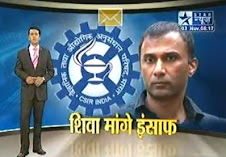
The Audit Report of TCGA (- a Public-Private partnership by IGIB under the leadership of S K Brahmachari) by a Government of India agency have now come to a similar conclusion. It has found that:
1. IGIB did not follow proper procedures in selecting the private partner. It did not call for competitive bids; it instead decided on a private partner based on favoritism.
2. The agreement with the private player (i.e. The Chatterjee Group) was not vetted by a legal expert to ensure safeguarding the interest of investing public funds.
3. There were no terms and conditions for sharing of total revenue by the partners in the agreement except that earned through IP rights (i.e. no agremment on revenues from other sources such as services).
4. The list of equipment (along with cost) to be provided by both parties was not clearly defined. The audit report particularly took note of lack of any clause on the contribution of the private partner.
5. The risk involved to both the parties were not identified or shared in a balanced manner. The liabilities of the private partner was restricted to only Rs 3.5 crores and even that clause was amended later in favour of the private partner.
6. There was no provision for preparation of separate accounts of TCGA and getting these certified from an independent Statutory Auditor for enabling IGIB to periodically review the same.
7. There were no penalty clause in case of any failure on the part of the private partner to comply with the provisions of the agreement and no exigencies were taken into consideration.
8. The private partner was given all rights of all matters, finance, legal, and appointment of manpower of TCGA (the newly formed entity under PPP mode).
9. IGIB did not effectively do any planning for the project to ensure its successful implementation.
The result of the above is that TCGA even after 5 years of its existence is making loss, while it was supposed to show sustainable profit since its second year of functioning. Many crores of public fund has been lost due to delays, corruption and mismanagement.
[Note: The veracity of the above findings of the Audit Report can be checked by asking to make that report public and using RTI Act. Also see this.]
Tuesday, October 12, 2010


Wednesday, September 29, 2010
CSIR stole the idea and IP of Soleckshaw
A solar electric rickshaw launched with great fanfare by India's Council of Scientific and Industrial Research (CSIR) two years ago is yet to find any takers. While this is causing concern, a Pune engineer has claimed the CSIR copied his design.
The three-wheeled "soleckshaw" can in principle use solar panels to convert sunlight into electricity to drive its motor.
It was developed by the Central Mechanical Engineering Research Institute (CMERI) in Durgapur, West Bengal, a unit of the CSIR, and promoted as a green rickshaw because it emits no gases that can contribute to global warming.
Despite high-voltage publicity, the soleckshaw has not caught on. "Till now no soleckshaws have been sold in the market on a commercial basis by (our) licensees," Amit Banerjee, head of the manufacturing technology group at CMERI, said.
Around 30 soleckshaws fabricated at CMERI for demonstration were initially deployed in Delhi (at Chandni Chowk), Kolkata, Durgapur, Chandigarh, Jaipur, Dhanbad and Ahmedabad, said Himadri Maiti, senior adviser in the CSIR.
"However, currently they are not in operation due to various local administrative and management problems," he admitted.
Operations within the jurisdiction of the Municipal Corporation of Delhi (MCD) could not be resumed as the civic agency "has refused to grant a fresh licence" for any rickshaw, he added.
The charging stations set up at a few places by the Central Electronics Limited for charging the soleckshaws' batteries "are not being used at this point of time as the vehicles are not in operation at those locations", Maiti said.
He said the CSIR's plans to deploy at least 1,000 soleckshaws in the Commonwealth Games village in Delhi was abandoned as the Games Organising Committee, after initially agreeing to our proposal, "backed out on the plea of security issues".
And the CSIR's proposal to operate at least 10 soleckshaws for postal delivery under a pilot project in Rajashtan's Ajmer district is still pending with the postal department, he said.
To add to the CSIR's embarrassment, a Pune engineer has claimed that except for some slight changes, the CSIR's soleckshaw is a copy of the electric cycle rickshaw his non-profit research and development institute built some 10 years ago.
"Our electric cycle rickshaws were inaugurated in Pune University campus in 2002 and technical details were published in the Indian journal Current Science in its Sep 25, 2002, issue," Anil Rajvanshi, an Indian Institute of Technology graduate and director of the Nimbkar Agricultural Research Institute (NARI) near Pune, said.
Twenty such rickshaws were fabricated at NARI which logged more than 5,000 km in trial runs, he said.
"Ours was the first motor-assisted pedal rickshaw with back wheel braking and gears, which the CSIR also has in its design," he said.
"Instead of putting a permanent magnet direct current motor at the back, the CSIR used the hub wheel motor on the front wheel and specifications regarding the speed, travel distance per battery charge etc are also almost same," he said.
"So one can say it is a very good copy of our efforts," he told IANS.
"In May last year, I even sent them (CSIR) an e-mail telling them they seemed to have copied our design of the electric rickshaw but till today there is no reply," said Rajvanshi who, after a teaching stint at the University of Florida in the US, returned to India in 1981 to devote himself to research at NARI set up by his father in 1968.
The electric rickshaw is one of NARI's products. Others include improved kerosene lanterns, sugarcane leaf gasifier and sweet sorghum -- a sorghum grass variety that can be used as food and fuel.
But Banerjee denied that the soleckshaw is a copy of NARI's electric rickshaw. "It is a completely different technology," he said.
"It has been designed, developed and manufactured completely by us," he said, adding, "There are a few technical novelties in soleckshaws, compared to any such vehicle in the world, which we cannot disclose at this moment."
Rajvanshi said NARI's intellectual property has been copied by the CSIR but claimed he neither had the resources nor the time to fight the government of India.
"It would have been nice if the CSIR had at least acknowledged NARI's pioneering efforts," he said.
"We at NARI failed in our attempt to commercialise our electric rickshaws; if the CSIR can popularise theirs and sell them in large numbers then it will be a vindication of our work," Rajvanshi said.
However, that looks like wishful thinking given the fact that two years after its launch there are no soleckshaws on the road except the 10 vehicles that Maiti said were "currently plying in Faridabad (Haryana) with the initiative of one of the licensees".
The failure of the soleckshaw to take off is not unexpected, said a senior CSIR scientist who did not want to be named.
"Our primary goal should have been removing drudgery of rickshaw pullers by introducing motorised rickshaws rather than 'green' rickshaws and cutting down carbon emissions," he said.
[The above article was published in The Economic Times Online on 28th Sep. 2010]
The three-wheeled "soleckshaw" can in principle use solar panels to convert sunlight into electricity to drive its motor.
It was developed by the Central Mechanical Engineering Research Institute (CMERI) in Durgapur, West Bengal, a unit of the CSIR, and promoted as a green rickshaw because it emits no gases that can contribute to global warming.
Despite high-voltage publicity, the soleckshaw has not caught on. "Till now no soleckshaws have been sold in the market on a commercial basis by (our) licensees," Amit Banerjee, head of the manufacturing technology group at CMERI, said.
Around 30 soleckshaws fabricated at CMERI for demonstration were initially deployed in Delhi (at Chandni Chowk), Kolkata, Durgapur, Chandigarh, Jaipur, Dhanbad and Ahmedabad, said Himadri Maiti, senior adviser in the CSIR.
"However, currently they are not in operation due to various local administrative and management problems," he admitted.
Operations within the jurisdiction of the Municipal Corporation of Delhi (MCD) could not be resumed as the civic agency "has refused to grant a fresh licence" for any rickshaw, he added.
The charging stations set up at a few places by the Central Electronics Limited for charging the soleckshaws' batteries "are not being used at this point of time as the vehicles are not in operation at those locations", Maiti said.
He said the CSIR's plans to deploy at least 1,000 soleckshaws in the Commonwealth Games village in Delhi was abandoned as the Games Organising Committee, after initially agreeing to our proposal, "backed out on the plea of security issues".
And the CSIR's proposal to operate at least 10 soleckshaws for postal delivery under a pilot project in Rajashtan's Ajmer district is still pending with the postal department, he said.
To add to the CSIR's embarrassment, a Pune engineer has claimed that except for some slight changes, the CSIR's soleckshaw is a copy of the electric cycle rickshaw his non-profit research and development institute built some 10 years ago.
"Our electric cycle rickshaws were inaugurated in Pune University campus in 2002 and technical details were published in the Indian journal Current Science in its Sep 25, 2002, issue," Anil Rajvanshi, an Indian Institute of Technology graduate and director of the Nimbkar Agricultural Research Institute (NARI) near Pune, said.
Twenty such rickshaws were fabricated at NARI which logged more than 5,000 km in trial runs, he said.
"Ours was the first motor-assisted pedal rickshaw with back wheel braking and gears, which the CSIR also has in its design," he said.
"Instead of putting a permanent magnet direct current motor at the back, the CSIR used the hub wheel motor on the front wheel and specifications regarding the speed, travel distance per battery charge etc are also almost same," he said.
"So one can say it is a very good copy of our efforts," he told IANS.
"In May last year, I even sent them (CSIR) an e-mail telling them they seemed to have copied our design of the electric rickshaw but till today there is no reply," said Rajvanshi who, after a teaching stint at the University of Florida in the US, returned to India in 1981 to devote himself to research at NARI set up by his father in 1968.
The electric rickshaw is one of NARI's products. Others include improved kerosene lanterns, sugarcane leaf gasifier and sweet sorghum -- a sorghum grass variety that can be used as food and fuel.
But Banerjee denied that the soleckshaw is a copy of NARI's electric rickshaw. "It is a completely different technology," he said.
"It has been designed, developed and manufactured completely by us," he said, adding, "There are a few technical novelties in soleckshaws, compared to any such vehicle in the world, which we cannot disclose at this moment."
Rajvanshi said NARI's intellectual property has been copied by the CSIR but claimed he neither had the resources nor the time to fight the government of India.
"It would have been nice if the CSIR had at least acknowledged NARI's pioneering efforts," he said.
"We at NARI failed in our attempt to commercialise our electric rickshaws; if the CSIR can popularise theirs and sell them in large numbers then it will be a vindication of our work," Rajvanshi said.
However, that looks like wishful thinking given the fact that two years after its launch there are no soleckshaws on the road except the 10 vehicles that Maiti said were "currently plying in Faridabad (Haryana) with the initiative of one of the licensees".
The failure of the soleckshaw to take off is not unexpected, said a senior CSIR scientist who did not want to be named.
"Our primary goal should have been removing drudgery of rickshaw pullers by introducing motorised rickshaws rather than 'green' rickshaws and cutting down carbon emissions," he said.
[The above article was published in The Economic Times Online on 28th Sep. 2010]
Friday, June 11, 2010
Brahmachari's Lies and Fraud of OSDD Exposed in Nature!
Samir Brahmachari and his new his sidekick Rajesh Gokhale are again exposed in the Media, for their fraud and lies, this time in the latest Nature article, for their hype of OSDD. The two were last scene cowardly hiding behind well-orchestrated blog rebuttals by their coterie of young recruits, after the Nature expose.
Six months earlier, in another PR fiasco (see article), the duo failed miserably in a PR Stunt to convince the Indian public that they had done a revolutionary act by sequencing a Indian human genome. Esteemed Indian scientist spoke up and exposed Brahmachari and Gokhale for having done nothing new and for having wasted Indian taxpayer dollars.
To cover up that PR fiasco, Bamboozling Brahmchari and Rajesh Gokhale (who himself called OSDD a fraud), have now attempted to cover their tracks by an even bigger lie befitting a Bolloywood script.
In this new scene, Brahamchari, (a professed fan of Hitler and Hitler’s BIG LIE approach) is going to save the world, win the Nobel Prize, using impoverished students, “high science” and “annotation of the TB Genome”, to cure TB, through Open Source --- All wonderful elements for the front page of any Bollywood rag.
The only thing Brahmachari should get now is jail time and perhaps leave to go study at RADA (Royal Academy of Dramatic Arts) so he gets his formal professional affiliation as an Actor.
Fortunately, a courageous reporter at Nature, K.S. Jayaraman has raised questions about OSDD, and is now under the crosshairs of Bhramachari and his coterie of sychophants. Most deplorable is how Brahmachari has recruited students to join his theatrical parade by giving away laptops and a false sense of “scientific collaboration” and Indian patriotism.
Ironically, Brahmachari, an Indian, himself is singularly responsible for the oppression of thousands of innovative CSIR Indian scientists, by putting in place larger number of incompetent Directors who do his bidding, but ensure anyone competent or of significant creativity who expresses dissent or differing views is demolished overnight --- not the basis for Science, Truth or Innovation.
The current PR of “annotation of the TB genome” is Mr. Brahmachari’s continuing “big lie” and hype tactic. This time, however, not only esteemed Indian scientists but also prominent International Scientists have severely criticised the PR stunt around TB annotation. A new Nature article, now in press, itself has brought Brahmachari’s lies and fraud to worldwide attention.
S K Brahmachari is a fraud as a scientist. He uses a coterie of other frauds such as Vinod Scaria and Zakir Thomas, who do not even have a PhD in life sciences. And those who claim to be scientists and are at Director Level in CSIR labs (such as Rajesh Gokhale of IGIB) make bizarre and ludicrous assertions that there is no need for peer review and publication of scientific findings.
While Brahmachari may have swayed early media reports in his favour by his gimmicks; he terribly failed to impress prominent scientists by his bluffing. Following are some of the comments about TB annotation claims made by prominent scientists and even the partner organizations of OSDD:
· John Quackenbush (Professor of computational biology and bioinformatics at the Dana-Farber Cancer Institute in Boston, USA): “Annotation is a challenging job requiring specialists, and I doubt if students with little experience can do this. It is unfortunate the Indian group made these claims before outsiders had a chance to review the students' data. The worst thing you can do to your country is to oversell your science.”
· James Galagan (Associate Director of microbial genome analysis at the Broad Institute, USA): “Until we are able to review the data from the India group, it will be hard to know how well they dealt with issues of quality control, standardization and clear quantitative metrics — difficult but non-trivial issues with annotation projects.”
· Richard Jefferson (CEO, Cambia, Australia) who is the only international partner of OSDD says: “External validation of these annotations experimentally and computationally remains to be done, and will clearly need to be subject to peer review…. Until then… the contributions will be conjectural.” He also admitted that OSDD team has “oversold” its work.
· Dr K. Anil Kumar (Principal scientist at the Institute of Life Sciences in Hyderabad, a partner in the OSDD project) says: “I guess there was a lot of pressure on the OSDD team to hurry up; validation was sidelined as it takes time.”
· Dr. Pushpa Bhargava (Founding-Director, CCMB, Hyderabad, a lab of CSIR) says that the claims that the team had identified a candidate drug molecule and that students reliably annotated the genome so quickly "are simply hilarious".
Mr. Brahmachari and his cronies are thus proved as big time LIARS once again, and a disgrace to Indian Science. What does Mr. Brahmachari gets by making such foolhardy claims? We hope he is not taking his public claims of winning Noble Prize due to OSDD too seriously.
Brahmachari is driven by two motives: (1) PR for himself and fame and (2) Moving money for those who financed his being made Ad Hoc Director General. Note, Lalji Singh was to become DG, and at the last minute a Bengali mafia paid off Minister of S&T to put incompetent Brahmachari in place.
OSDD is part of the entire game. It is not only a PR stunt to boost the image of 'unreal' scientists, but also a clever model to siphon off crores of tax-payers money in the name of research. The reality of this is substantiated from the recent claim of Dr. T.K. Chakraborty (Director, CDRI) on the eve of 59th Annual Day of CDRI: "Phase III clinical trials, to evaluate the hepatoprotective effect of Picroliv in patients of tuberculosis receiving multi-drug treatment has been concluded. The data has been compiled and detailed analysis is in progress. An interim analysis of the data shows enhanced clinical recovery in Picroliv treated tuberculosis patients."
If a drug is already in such an advanced stage of development and that too within a CSIR lab then what is the purpose of OSDD TB research?
What is the recent talk of a very early stage lead molecule for TB cure being given to Jubilant Chemsys by IGIB for further research and development?
This shows a public-private nexus to gain from tax-payers' money. Moreover, the Scientific Committees made for OSDD has majority of members that are either friends/colleagues/subordinates to S K Brahmachari and/or direct beneficiaries of the government money (and not top-league international scientists).
For example, Gokhale (IGIB, Delhi) is in the scientific committee and Raghava (IMT, Chandigarh) and Andrew Lynn (JNU, Delhi) are part of budget committee and all of them enjoy the benefits of grant money (in fact being the biggest beneficiaries). With such people in committees, not all expenses (direct or indirect) relating to OSDD is available for public scrutiny.
During an investigative inquiry, S K Brahmachari refused to provide answers to Nature Reporter.
Why is he afraid to hold an Open Forum with international scientists to prove or disprove his claims?
The call for Open Forum was first made by Dr. Shiva Ayyadurai and Dr. Deepak Sardana in October 2009 when they revealed inappropriate conducts of CSIR Leadership (link to report). They raised doubts and several questions about CSIR-Tech, OSDD, Soleckshaw, hiring of individuals for important positions, and several big-ticket government sponsored research in a Nature Commentary (link)
S K Brahmachari never answered those questions and continued to carry on with his unethical corporate governance style, perhaps with full support of Prithviraj Chavan (Minister for S&T). In such a short period of time they have completely stultified the reputation of CSIR and transformed it into Corrupt Society of Indian Researchers.
It is now time for CSIR scientists to stand up for Indian Science, petition for the immediate ouster of Brahmachari and his coterie, speak up as other Scientists have done to expose the hype, so Indian science can truly flourish in an environment of openness, freedom and transparency.
[Also see the previous article titled "Proof that OSDD Claims are LIES" on our blog]
Six months earlier, in another PR fiasco (see article), the duo failed miserably in a PR Stunt to convince the Indian public that they had done a revolutionary act by sequencing a Indian human genome. Esteemed Indian scientist spoke up and exposed Brahmachari and Gokhale for having done nothing new and for having wasted Indian taxpayer dollars.
To cover up that PR fiasco, Bamboozling Brahmchari and Rajesh Gokhale (who himself called OSDD a fraud), have now attempted to cover their tracks by an even bigger lie befitting a Bolloywood script.
In this new scene, Brahamchari, (a professed fan of Hitler and Hitler’s BIG LIE approach) is going to save the world, win the Nobel Prize, using impoverished students, “high science” and “annotation of the TB Genome”, to cure TB, through Open Source --- All wonderful elements for the front page of any Bollywood rag.
The only thing Brahmachari should get now is jail time and perhaps leave to go study at RADA (Royal Academy of Dramatic Arts) so he gets his formal professional affiliation as an Actor.
Fortunately, a courageous reporter at Nature, K.S. Jayaraman has raised questions about OSDD, and is now under the crosshairs of Bhramachari and his coterie of sychophants. Most deplorable is how Brahmachari has recruited students to join his theatrical parade by giving away laptops and a false sense of “scientific collaboration” and Indian patriotism.
Ironically, Brahmachari, an Indian, himself is singularly responsible for the oppression of thousands of innovative CSIR Indian scientists, by putting in place larger number of incompetent Directors who do his bidding, but ensure anyone competent or of significant creativity who expresses dissent or differing views is demolished overnight --- not the basis for Science, Truth or Innovation.
The current PR of “annotation of the TB genome” is Mr. Brahmachari’s continuing “big lie” and hype tactic. This time, however, not only esteemed Indian scientists but also prominent International Scientists have severely criticised the PR stunt around TB annotation. A new Nature article, now in press, itself has brought Brahmachari’s lies and fraud to worldwide attention.
S K Brahmachari is a fraud as a scientist. He uses a coterie of other frauds such as Vinod Scaria and Zakir Thomas, who do not even have a PhD in life sciences. And those who claim to be scientists and are at Director Level in CSIR labs (such as Rajesh Gokhale of IGIB) make bizarre and ludicrous assertions that there is no need for peer review and publication of scientific findings.
While Brahmachari may have swayed early media reports in his favour by his gimmicks; he terribly failed to impress prominent scientists by his bluffing. Following are some of the comments about TB annotation claims made by prominent scientists and even the partner organizations of OSDD:
· John Quackenbush (Professor of computational biology and bioinformatics at the Dana-Farber Cancer Institute in Boston, USA): “Annotation is a challenging job requiring specialists, and I doubt if students with little experience can do this. It is unfortunate the Indian group made these claims before outsiders had a chance to review the students' data. The worst thing you can do to your country is to oversell your science.”
· James Galagan (Associate Director of microbial genome analysis at the Broad Institute, USA): “Until we are able to review the data from the India group, it will be hard to know how well they dealt with issues of quality control, standardization and clear quantitative metrics — difficult but non-trivial issues with annotation projects.”
· Richard Jefferson (CEO, Cambia, Australia) who is the only international partner of OSDD says: “External validation of these annotations experimentally and computationally remains to be done, and will clearly need to be subject to peer review…. Until then… the contributions will be conjectural.” He also admitted that OSDD team has “oversold” its work.
· Dr K. Anil Kumar (Principal scientist at the Institute of Life Sciences in Hyderabad, a partner in the OSDD project) says: “I guess there was a lot of pressure on the OSDD team to hurry up; validation was sidelined as it takes time.”
· Dr. Pushpa Bhargava (Founding-Director, CCMB, Hyderabad, a lab of CSIR) says that the claims that the team had identified a candidate drug molecule and that students reliably annotated the genome so quickly "are simply hilarious".
Mr. Brahmachari and his cronies are thus proved as big time LIARS once again, and a disgrace to Indian Science. What does Mr. Brahmachari gets by making such foolhardy claims? We hope he is not taking his public claims of winning Noble Prize due to OSDD too seriously.
Brahmachari is driven by two motives: (1) PR for himself and fame and (2) Moving money for those who financed his being made Ad Hoc Director General. Note, Lalji Singh was to become DG, and at the last minute a Bengali mafia paid off Minister of S&T to put incompetent Brahmachari in place.
OSDD is part of the entire game. It is not only a PR stunt to boost the image of 'unreal' scientists, but also a clever model to siphon off crores of tax-payers money in the name of research. The reality of this is substantiated from the recent claim of Dr. T.K. Chakraborty (Director, CDRI) on the eve of 59th Annual Day of CDRI: "Phase III clinical trials, to evaluate the hepatoprotective effect of Picroliv in patients of tuberculosis receiving multi-drug treatment has been concluded. The data has been compiled and detailed analysis is in progress. An interim analysis of the data shows enhanced clinical recovery in Picroliv treated tuberculosis patients."
If a drug is already in such an advanced stage of development and that too within a CSIR lab then what is the purpose of OSDD TB research?
What is the recent talk of a very early stage lead molecule for TB cure being given to Jubilant Chemsys by IGIB for further research and development?
This shows a public-private nexus to gain from tax-payers' money. Moreover, the Scientific Committees made for OSDD has majority of members that are either friends/colleagues/subordinates to S K Brahmachari and/or direct beneficiaries of the government money (and not top-league international scientists).
For example, Gokhale (IGIB, Delhi) is in the scientific committee and Raghava (IMT, Chandigarh) and Andrew Lynn (JNU, Delhi) are part of budget committee and all of them enjoy the benefits of grant money (in fact being the biggest beneficiaries). With such people in committees, not all expenses (direct or indirect) relating to OSDD is available for public scrutiny.
During an investigative inquiry, S K Brahmachari refused to provide answers to Nature Reporter.
Why is he afraid to hold an Open Forum with international scientists to prove or disprove his claims?
The call for Open Forum was first made by Dr. Shiva Ayyadurai and Dr. Deepak Sardana in October 2009 when they revealed inappropriate conducts of CSIR Leadership (link to report). They raised doubts and several questions about CSIR-Tech, OSDD, Soleckshaw, hiring of individuals for important positions, and several big-ticket government sponsored research in a Nature Commentary (link)
S K Brahmachari never answered those questions and continued to carry on with his unethical corporate governance style, perhaps with full support of Prithviraj Chavan (Minister for S&T). In such a short period of time they have completely stultified the reputation of CSIR and transformed it into Corrupt Society of Indian Researchers.
It is now time for CSIR scientists to stand up for Indian Science, petition for the immediate ouster of Brahmachari and his coterie, speak up as other Scientists have done to expose the hype, so Indian science can truly flourish in an environment of openness, freedom and transparency.
[Also see the previous article titled "Proof that OSDD Claims are LIES" on our blog]
Proof that OSDD Claims are LIES
We will first lay out his ‘scientific’ claims on this matter and then provide proof to you that what Brahmachari and his cronies has been saying is nothing but a LIE.
Following are the claims that Brahmachari and his cronies have made to the media and Indian public:
• “Mycobacterium tuberculosis H37Rv was first isolated in 1905, has remained pathogenic and is the most widely used strain in tuberculosis research. The complete genome sequence and annotation of this strain was published in 1998 (Cole et al., 1998 ). The information from this project was incorporated into the public database TubercuList which was created using the GenoList model (Moszer et al., 2002).” [Refer to Microbiology 148 (2002), 2967-2973]
• “Presently, it is possible to assign a function to 2058 proteins (52% of the 3995 proteins predicted) and only 376 putative proteins share no homology with known proteins and thus could be unique to M. tuberculosis.” [Refer to Microbiology 148 (2002), 2967-2973]
• “This document provides a brief description of how we generated the annotation for the finished genome of M. tuberculosis F11 strain.” [Refer to: TBDB.org]
• “We are happy to announce the integration of TB Diversity Sequencing dataset generated by Sebastien Gagneux and Peter Small through The Broad Institute Genomic Sequencing Center for Infectious Diseases (GSCID) established by the National Institute of Allergy and Infectious Diseases (NIAID). TBDB now provides users the ability to search and compare 30+ sequenced strains selected to represent the phylogenetic diversity of TB.” [Refer to: TBDB]
Other web links of interest:
1. Sanger Institute's TB initiative
2. J Craig Venter Institute - TB work
3. What is Genome Annotation?
From the above one can CONCLUDE the following things:
• The genome had been sequenced and efforts on annotation were on-going. Scientists have been trying to find the function of all the genes. And, that they were already more than 50% through with annotation of TB in 2002 itself and that TB database (supported by The Gates Foundation) have already done this job and made it publicly available.
• Existence of publicly available databases for TB gene sequence and annotation, some of them have been discussed above. One database is in Pasteur Institut; the other one is in Stanford (which is being supported by Gates Foundation)
In fact, 'real' scientists have already made huge progress in developing diagnostics, vaccines, and therapeutics for TB (and OSDD team deliberately chose to not acknowledge them):
• TB Diagnotics - Commercially available diagnostic kits being sold by Cellestis
• TB Vaccines - New TB Vaccine for the World by AERAS
• TB Therapeutics - "Sequella Inc. receives Orphan Drug Status for SQ109 from the U.S. Food and Drug Administration and the European Medicines Agency, entitling Sequella Inc. to seven years of market exclusivity for SQ109 for the treatment of patients with tuberculosis."
Following are the claims that Brahmachari and his cronies have made to the media and Indian public:
- “As of today we’ve annotated nearly 98% of the MTB. That concludes a major phase of the OSDD project and is a big step forward for science.” – S K Brahmachari (This he considers a big step because of the belief that only 25- 40% of TB genes have been annotated).
- The official letter dated 27th Oct. 2009 sent by Zakir Thomas, Project Director OSDD, states the following: "Though Mtb was sequenced a decade back, the standard databases have not annotated more than 1000 of the near 4000 genes encoded by the organism. This is symptomatic of the problem of neglected diseases of the poor. OSDD is taking up the challenge of annotating all possible genes in Mtb and hopes that your institution would join this massive effort."
- “The TB genome was sequenced in 1998, but more than half the genes in the genome did not have any function attached to them.” – Vinod Scaria
- “We wanted to collect all the information in one place.” – Vinod Scaria
- “This is the first time that a comprehensive mapping of the M. tuberculosis genome has been compiled, verified and made publicly available." – S K Brahmachari
- SK Brahmachari and OSDD team also made claims several times that no new drug for TB has been developed in past four decades.
• “Mycobacterium tuberculosis H37Rv was first isolated in 1905, has remained pathogenic and is the most widely used strain in tuberculosis research. The complete genome sequence and annotation of this strain was published in 1998 (Cole et al., 1998 ). The information from this project was incorporated into the public database TubercuList which was created using the GenoList model (Moszer et al., 2002).” [Refer to Microbiology 148 (2002), 2967-2973]
• “Presently, it is possible to assign a function to 2058 proteins (52% of the 3995 proteins predicted) and only 376 putative proteins share no homology with known proteins and thus could be unique to M. tuberculosis.” [Refer to Microbiology 148 (2002), 2967-2973]
• “This document provides a brief description of how we generated the annotation for the finished genome of M. tuberculosis F11 strain.” [Refer to: TBDB.org]
• “We are happy to announce the integration of TB Diversity Sequencing dataset generated by Sebastien Gagneux and Peter Small through The Broad Institute Genomic Sequencing Center for Infectious Diseases (GSCID) established by the National Institute of Allergy and Infectious Diseases (NIAID). TBDB now provides users the ability to search and compare 30+ sequenced strains selected to represent the phylogenetic diversity of TB.” [Refer to: TBDB]
Other web links of interest:
1. Sanger Institute's TB initiative
2. J Craig Venter Institute - TB work
3. What is Genome Annotation?
From the above one can CONCLUDE the following things:
• The genome had been sequenced and efforts on annotation were on-going. Scientists have been trying to find the function of all the genes. And, that they were already more than 50% through with annotation of TB in 2002 itself and that TB database (supported by The Gates Foundation) have already done this job and made it publicly available.
• Existence of publicly available databases for TB gene sequence and annotation, some of them have been discussed above. One database is in Pasteur Institut; the other one is in Stanford (which is being supported by Gates Foundation)
In fact, 'real' scientists have already made huge progress in developing diagnostics, vaccines, and therapeutics for TB (and OSDD team deliberately chose to not acknowledge them):
• TB Diagnotics - Commercially available diagnostic kits being sold by Cellestis
• TB Vaccines - New TB Vaccine for the World by AERAS
• TB Therapeutics - "Sequella Inc. receives Orphan Drug Status for SQ109 from the U.S. Food and Drug Administration and the European Medicines Agency, entitling Sequella Inc. to seven years of market exclusivity for SQ109 for the treatment of patients with tuberculosis."
Subscribe to:
Posts (Atom)